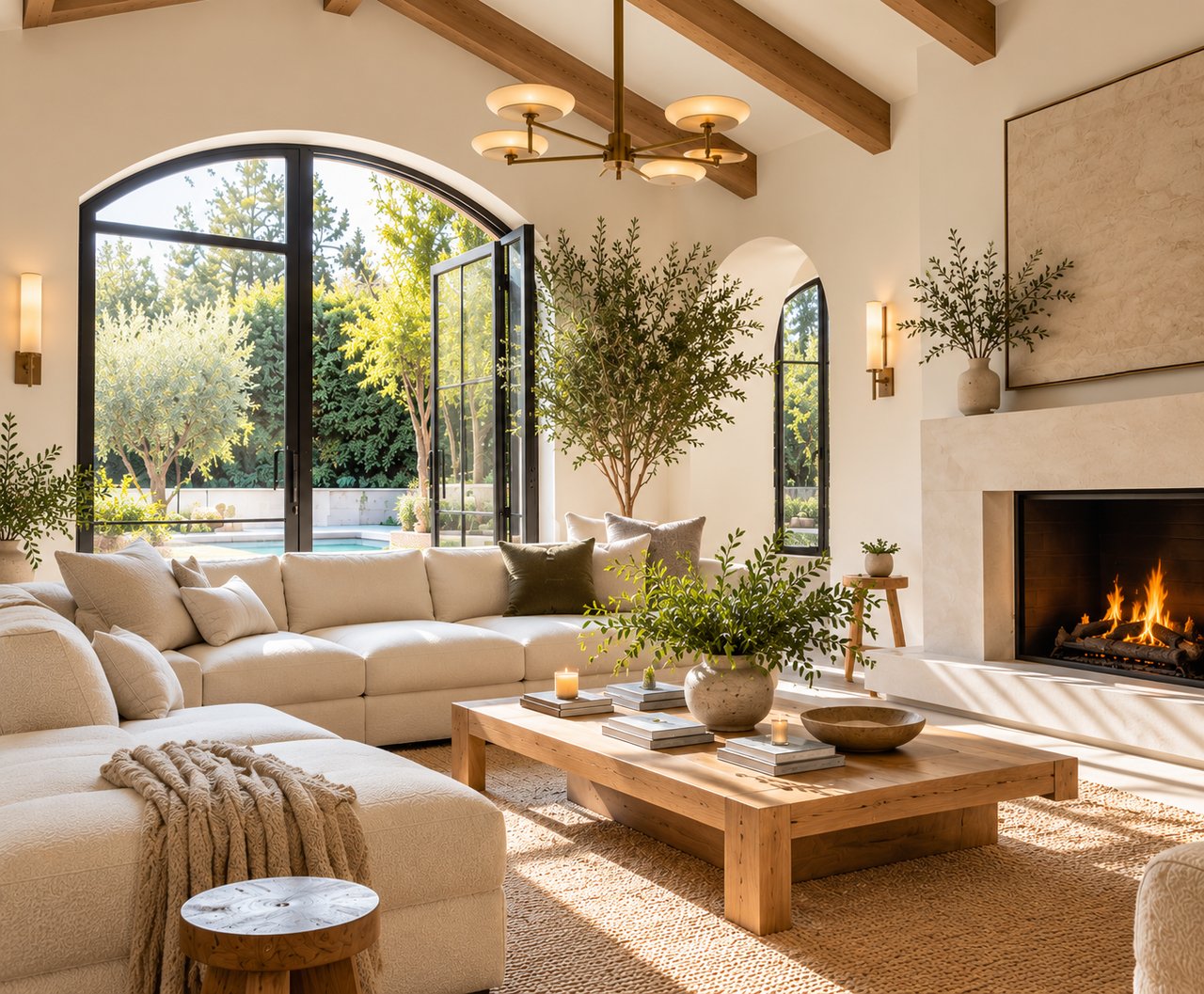
Transform your everyday living space into a calm, restorative retreat by minimizing visual clutter, incorporating softer lighting, and making intentional design choices that invite ease & comfort.
Designing a serene, minimalist space is about more than appearance. It’s about creating a calming environment where every object is intentional—valued for its function, its beauty, or both. Here are 10 practical ways to bring a sense of peace, balance, & harmony into your home.

1. Clear Surfaces Daily
Clutter creates visual noise. Each time you notice a stack of mail, tangled jewelry, or unfolded laundry, your mind registers it as something that needs attention. That subtle mental load adds up.
To foster a calmer home environment, build the habit of resetting your surfaces each day. Clearing countertops, tables, & nightstands allows your eyes to move easily through a room—reducing distraction & helping you feel more grounded in the present.

2. Bring in Support When Needed
There’s value in recognizing when an outside perspective can make all the difference. A professional organizer can help you streamline clutter with systems that last. A decorator can refine your aesthetic & translate your vision into a cohesive design. An architect can reimagine your layout to better support how you actually live.
Sometimes the fastest path to a more peaceful home is partnering with someone who specializes in creating one.

3. Incorporate the Five Elements
Don’t stop with potted plants — to really embrace nature in your home, make sure all five elements are represented. They are: water (images of water, a fountain, flowers in a bowl of water), earth (stone, plants), fire (candles, incense, fireplace), metal (furniture, tools) and wood (furniture, beams).

4. Keep Floors Open & Uncluttered
Just as clear surfaces reduce visual distraction, unobstructed floors create a sense of flow & ease. When items begin to collect at your feet, it often signals that they don’t have a designated place. Establishing proper storage solutions prevents buildup & eliminates the subtle stress of navigating around clutter.
Beyond organization, maintaining clean, dust-free floors enhances both comfort & indoor air quality—contributing to a lighter, more breathable living environment.

5. Choose Fewer, More Meaningful Pieces
Rather than accumulating décor for the sake of filling space, be intentional about what you display. Select items you genuinely love—objects that carry personal significance or elevate the room through thoughtful design.
A curated collection of meaningful pieces often has far greater impact than an abundance of random accents. By simplifying, you create room to fully appreciate what surrounds you.

6. Incorporate Natural Fragrance
Scent has a powerful influence on mood. Think about how certain boutiques feel elevated the moment you step inside, or how the aroma of essential oils in a spa immediately signals relaxation. Fragrance shapes atmosphere more than we often realize.
To create a clean, calming environment at home, opt for natural sources of scent rather than synthetic sprays. Beeswax candles, essential oil diffusers, plant-based cleaning products, and fresh-cut flowers can subtly transform the energy of a space while keeping the air feeling pure & inviting.

7. Soften Your Lighting
Light dramatically influences the mood of a room. Make the most of natural daylight by keeping windows unobstructed & allowing sunlight to fill your space. As evening approaches, consider transitioning gradually—using lamps or candlelight instead of relying solely on bright overhead fixtures.
If possible, install dimmer switches to give yourself greater control over intensity. The ability to adjust the glow throughout the day creates a warmer, more relaxed atmosphere & helps your home feel both inviting & restorative.

8. Be Intentional About Texture
Texture quietly shapes how a space feels. As you edit your home—or consider adding something new—ask yourself whether it engages the senses. The weight of a hand-thrown ceramic mug, for example, offers a very different tactile experience than a mass-produced alternative.
Layering natural materials adds depth & warmth. Incorporate elements like woven jute, textured linen, aged leather, silk, or unfinished wood to create a richer, more grounded atmosphere that feels inviting to both the eye & the touch.
Creating a peaceful home isn’t about perfection—it’s about intention. By simplifying your surroundings, curating meaningful décor, softening light, incorporating natural textures & scents, and maintaining clear, open spaces, you create an environment that supports calm, clarity, & everyday well-being. Small, consistent choices can transform your home into a place that feels balanced, restorative, & truly your own.
All the best!
Basya & Emily